
Last updated: January 11, 2026
Omamori in Kyoto: Types, Meanings, and Where to Buy Them
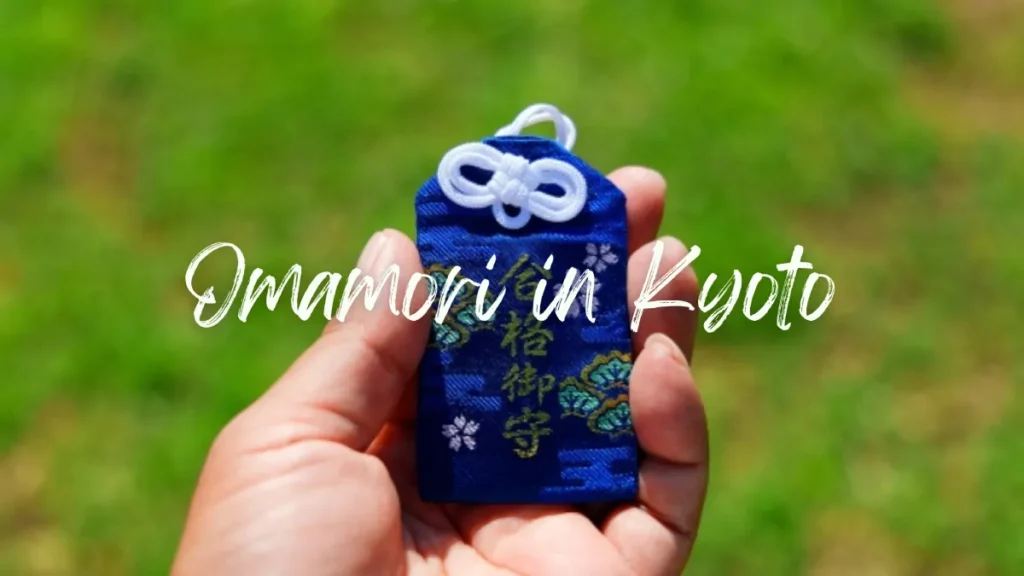
Omamori are small Japanese charms believed to bring protection, good luck, and guidance.
In Kyoto, where ancient temples and shrines stand side by side, you can find beautifully crafted omamori with deep cultural meaning.
This guide explains the most common types of omamori, what they mean, and where travelers can buy them in Kyoto.
What Are Omamori For? The Basics
Omamori are small charms meant to protect you or support your wishes. Shrines give the blessings of deities, while temples offer the protection of Buddhist figures.
Anyone can carry an omamori—there is no religious obligation. Many travelers enjoy them as a cultural experience and a reminder of their time in Kyoto.
Omamori Types and Meanings
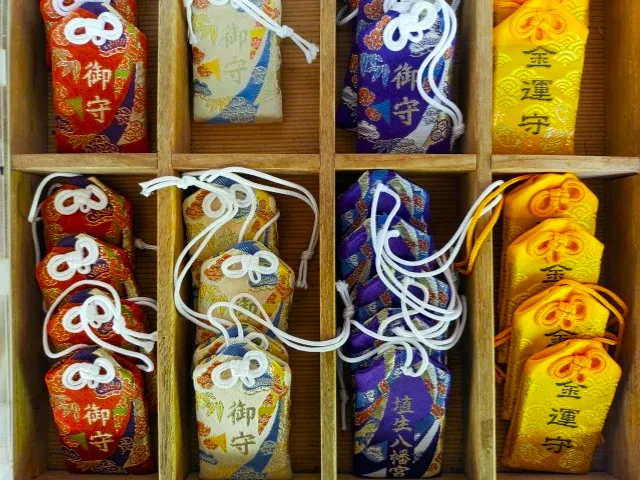
| Type | Meaning | For Travelers |
|---|---|---|
| 厄除け(Yakuyoke) / Protection from Misfortune | Protects you from trouble and misfortune. | Ideal for staying safe during your trip. Often red, black, or purple. |
| 交通安全(Kōtsū Anzen) / Safe Travels | Ensures safety during travel and transportation. | Very popular among tourists. Many attach it to their suitcase. |
| 学業成就・合格(Gakugyō Jōju / Gōkaku) / Academic Success | Supports study, exams, language learning, and passing important tests. | Perfect for students, Japanese learners, and anyone preparing for exams. |
| 縁結び(Enmusubi) / Love & Relationships | Improves love, relationships, and positive connections. | Kyoto’s love shrines are famous worldwide. Cute pink/red designs. |
| 金運(Kin’un) / Good Fortune & Prosperity | Boosts financial luck and prosperity. | Popular for business and career success. |
| 健康(Kenkō) / Health & Well-being | Supports health and recovery. | Often chosen as a thoughtful gift for family. |
| 安産・子授け(Anzan / Kozasuke) / Safe Childbirth & Fertility | Prayers for safe childbirth and fertility. | Adorable designs, very popular on social media. |
Where to Buy Omamori in Kyoto
-
Yasaka Shrine(八坂神社)
Famous for: Protection, health, love
Google Maps -
Kitano Tenmangu(北野天満宮)
Famous for: Academic success
Google Maps -
Seimei Shrine(晴明神社)
Famous for: Protection from misfortune
Google Maps -
Fushimi Inari Taisha(伏見稲荷大社)
Famous for: Safe travels, prosperity
Google Maps -
Kamigamo Shrine(上賀茂神社)
Famous for: Safe travels
Google Maps -
Jishu Shrine(地主神社)
Famous for: Love & relationships
Google Maps -
Kifune Shrine(貴船神社)
Famous for: Love & relationships
Google Maps -
Kiyomizu-dera(清水寺)
Famous for: Health
Google Maps -
Okazaki Shrine(岡崎神社)
Famous for: Safe childbirth & fertility
Google Maps
Where to Attach or Keep Your Omamori
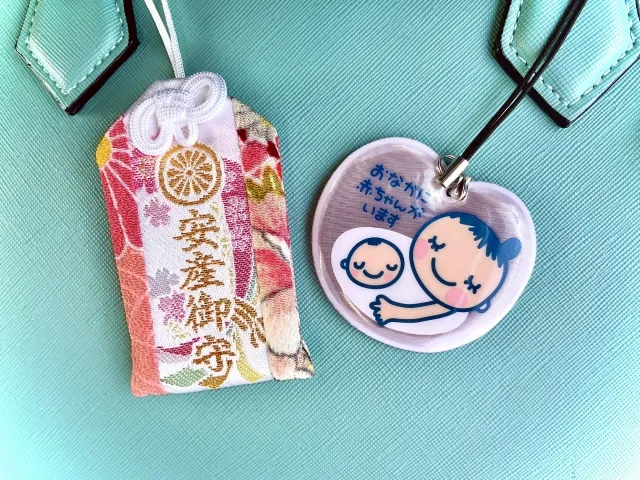
Omamori are meant to stay close to you in your daily life or during your travels. There is no strict rule about where to keep them, so you can choose a place that feels natural and comfortable.
Here are some common and meaningful places to keep your omamori:
On your bag or backpack Easy to carry and always with you during sightseeing.
On your suitcase Popular among travelers, especially for “Safe Travels” omamori.
Inside your wallet or purse Ideal for money-related charms such as good fortune or prosperity.
In your passport case A discreet way to keep protection close while traveling abroad.
In your car Many people hang a “Safe Travels” omamori inside their vehicle.
There is no religious obligation or strict etiquette. Choose a place that feels right for you, and let the omamori accompany you as a gentle reminder of your hopes and your journey in Kyoto.
Summary
Omamori are more than simple souvenirs — they are small, meaningful charms that carry hopes for protection, good luck, and personal wishes. In Kyoto, you can find beautifully crafted omamori at many temples and shrines, each with its own purpose and story.
Whether you choose one for safe travels, love, academic success, or health, the most important thing is selecting a charm that feels right for you. There are no strict rules about how to use or carry an omamori, making it easy for travelers to enjoy them as part of Japan’s cultural tradition.
As you explore Kyoto, finding an omamori that resonates with your journey can become a gentle reminder of your experiences — and a small source of comfort long after your trip ends.
Related Posts
- Sakura & Cherry Blossom Forecast 2026: Japan’s Nationwide Bloom Predictions and Kyoto’s 2025 Peak Viewing Dates by Area
- Day Pass Gyms in Kyoto: 3 Best Options for Tourists
- Hatsumode in Japan: How to Pray at a Shrine, Read Omikuji, and Write Ema
- Japanese Sake Tasting in Kyoto: Best Breweries with English Tours
ピンバック: Kyoto’s Seasonal Events Guide: A Cultural Journey Through Spring, Summer, Autumn, and Winter - Learn Japanese with Kyoto Stories